NAD+ peeling — when to put it on the menu, and when to skip it
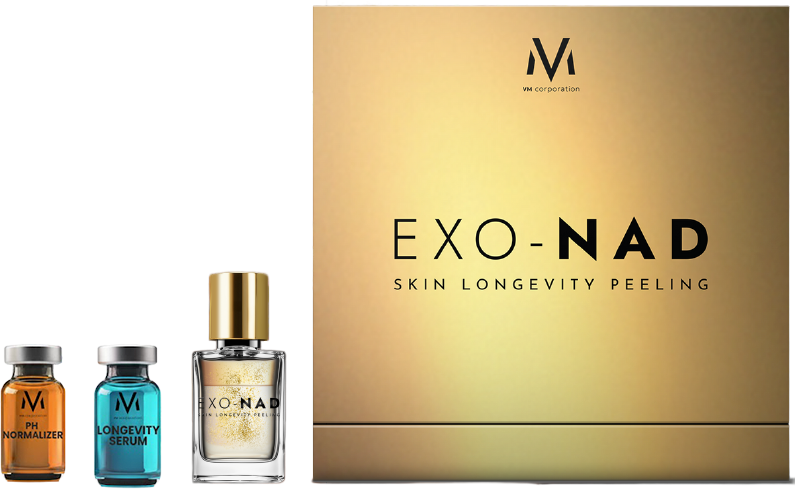
NAD+ (nicotinamide adenine dinucleotide) is the coenzyme your patients have been reading about in their longevity podcasts. In the clinic, it's the substrate for mitochondrial energy and DNA repair — the two things that quietly decline with age and that quietly drive the fatigued-looking skin you see at consultation.
EXO-NAD is a three-step longevity peeling built around that mechanism: pH normalizer, peptide-priming Longevity Serum, and the NAD+ peeling itself. The question is not whether NAD+ is interesting — it's whether the patient in front of you is the right patient.
Who it's for
- Patients whose chief complaint is dullness, fatigue and "flat" skin — not deep wrinkles
- 30–55 with no active resurfacing course in the previous 6 weeks
- Combining patients who already run a V-Tech series and want a second tool on alternating weeks
- Pre-event freshening — visible glow at 7–10 days, with minimal social downtime
Who it's not for
- Active inflammatory skin disease at the treatment zone
- Pregnancy and lactation
- Hypersensitivity to any component of the kit
- Recent isotretinoin therapy (within 6 months)
Where it sits next to V-Tech
On alternating weeks. The V-Tech facial system is the structural / density tool — exosomes plus the polynucleotide gel mask plus the sealing Exotech gel. EXO-NAD is the longevity tool — mitochondrial recovery and visible glow. Running them in alternation gives the practitioner a six-week story to tell at consultation, with two different mechanisms that complement rather than compete.
Course structure
3–4 sessions, two weeks apart. Maintenance once per quarter. Photograph at baseline — Mitoscan or your imaging device — and at the end of the course. Comparison without baseline is opinion.
Peelings used to compete on depth. Longevity peelings compete on substrate.
— EXO-NAD training note
Featured in this protocol
Bring this protocol into your clinic
Pricing, training and protocol support — get in touch.
Contact us